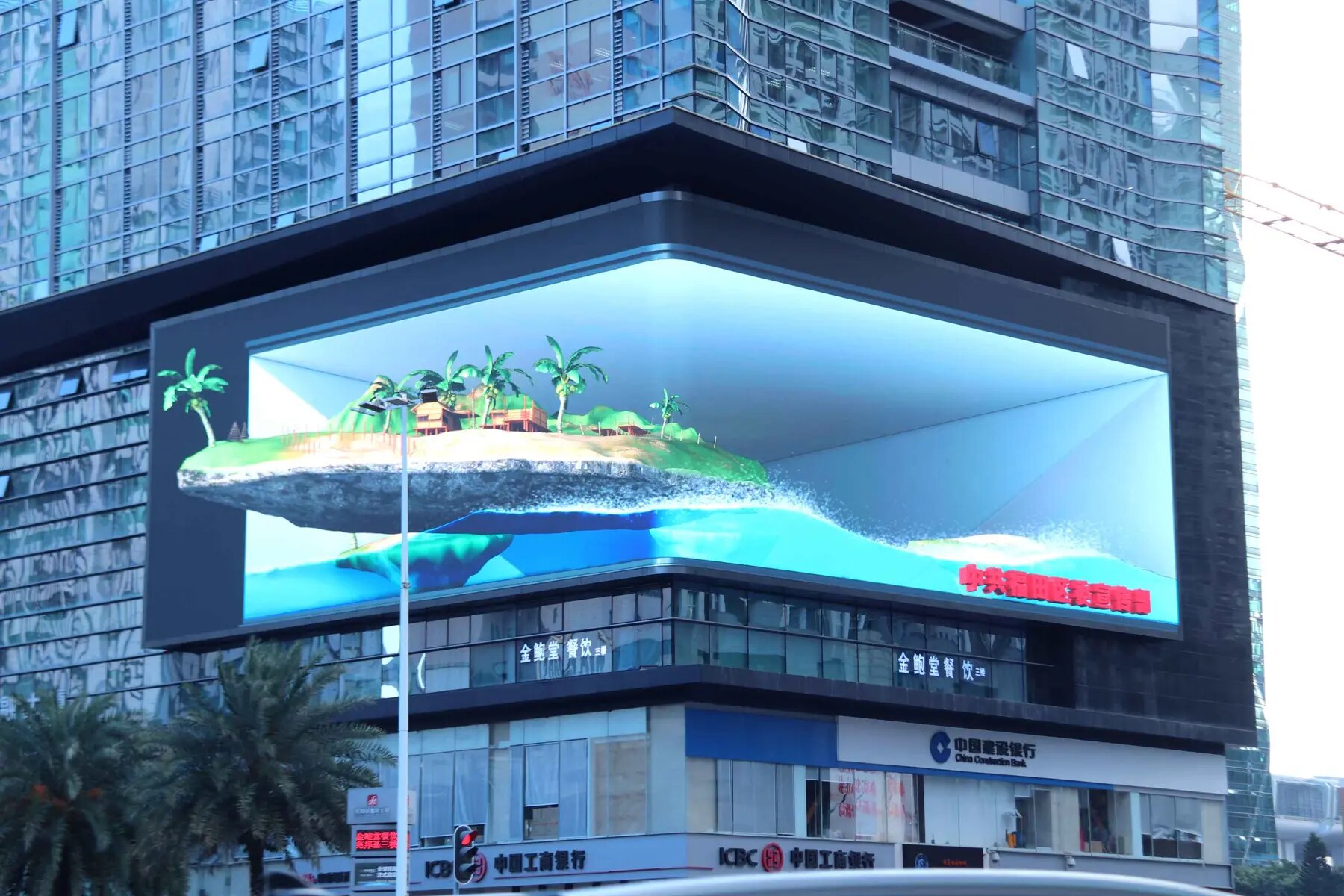
Indoor and outdoor LED screens use the same basic principle: modular LED cabinets combine to form one large image.
But the environment changes almost every part of the specification.
Brightness, weather protection, cabinet construction, structure and maintenance access all need to match where the screen will operate.
Brightness
Indoor LED operates in controlled lighting.
Outdoor LED has to compete with daylight and, in some locations, direct sun.
That is why outdoor models can be dramatically brighter.
Weather protection
An outdoor screen must be designed for rain, dust and environmental exposure.
IP ratings are therefore important.
An indoor panel should not simply be installed outdoors because it looks similar.
Pixel pitch
Indoor LED is often viewed from closer distances, so fine-pitch options are common.
Outdoor displays are frequently larger and viewed from farther away, meaning larger pixel pitches can be entirely appropriate.
The pitch should follow the audience, not the assumption that smaller is always better.
Structure
Outdoor LED usually places greater demands on structure.
Wind loading, supporting steelwork, fixing points, access and maintenance all need careful planning.
Large roadside or building-mounted displays are engineering projects as well as AV installations.
Power
Brightness and screen size affect power requirements.
A large outdoor wall needs proper electrical planning, distribution and safe isolation.
This should be designed before installation, not improvised afterwards.
Maintenance
Service access matters for both indoor and outdoor systems.
The cabinet choice may allow front, rear or dual-sided maintenance.
The installation needs enough space for future module, power-supply or receiving-card replacement.
Content
Outdoor content normally needs to be simpler and easier to read from farther away.
Large text, strong contrast and short messages work better than detailed layouts.
Indoor LED can support more detailed visual content because viewers are often closer.
Real Digi Sign examples
Our BPerfect Rushmere installation demonstrates fine-pitch curved LED in a premium indoor retail environment.
At Oasis Bingo Cookstown, Digi Sign installed a 6 m × 4 m P2.6 outdoor LED display.
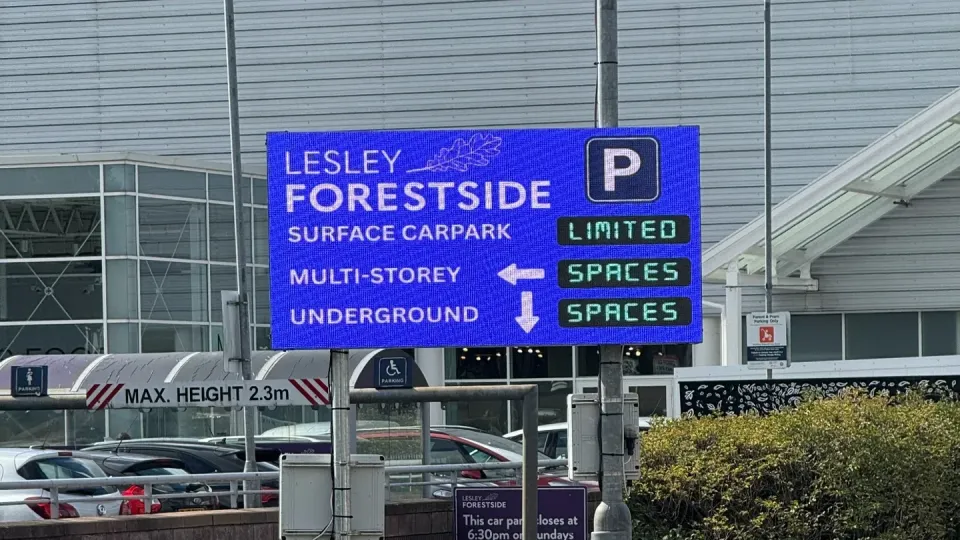
Forestside Shopping Centre uses P3.9 outdoor LED VMS displays integrated with live parking information.
These projects illustrate why the same LED specification would not suit every location.
Which Dicolor range should I choose?
The Dicolor LED catalogue covers fixed indoor, outdoor, rental, creative and specialist applications.
The correct series depends on:
- environment
- viewing distance
- screen size
- brightness
- shape
- service access
- content
- budget
Send us photographs, dimensions and viewing distances and we can narrow down the appropriate product before a site survey.
Does an IP rating settle every outdoor requirement?
No. Weather protection is one part of the specification. The exact model also needs to suit the site conditions, mounting, wind exposure, power provision, brightness control and maintenance access. Confirm the installation as a complete system.
See the applications in practice
Forestside Shopping Centre uses three outdoor P3.9 LED signs connected to its existing VMS and parking system. BPerfect Rushmere uses curved P1.6 LED indoors.
Discuss the conditions at your site before choosing an indoor or outdoor range.